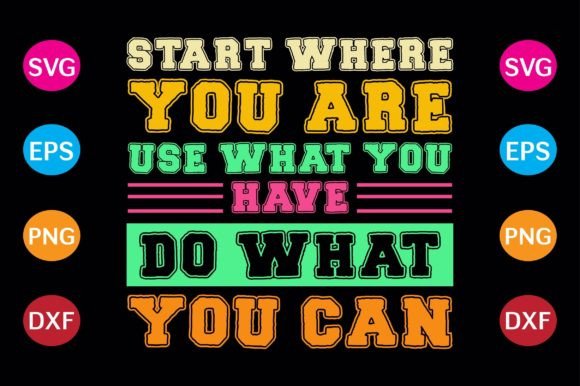
Start Where You Are, Use What You Have: The Back-to-School T-Shirt Design That Empowers Creators Right Now
Back-to-school season isn’t just for students anymore—it’s a strategic moment for professionals, creators, entrepreneurs, and marketers to reset workflows, reevaluate resources, and reignite momentum. This year, one design philosophy is resonating across creative communities, small business studios, and digital product marketplaces: Start Where You Are, Use What You Have. More than a motivational phrase, it’s a grounded, actionable framework—and now, it’s the centerpiece of a versatile, production-ready back-to-school T-shirt design built for real-world use.
What “Start Where You Are, Use What You Have” Really Means—Beyond the Slogan
Originating from pragmatic wisdom in fields as diverse as behavioral psychology, lean methodology, and creative entrepreneurship, Start Where You Are, Use What You Have rejects the myth of perfect readiness. It doesn’t ask you to wait for ideal tools, larger budgets, or flawless plans. Instead, it invites intentional action using your current context: your existing software stack, your skill set at this moment, your available time blocks, and even your physical workspace.
This isn’t about lowering standards—it’s about raising efficiency and reducing friction. For a freelance designer launching a merch line, it means designing a scalable vector file today with tools already installed—not postponing until a new subscription kicks in. For a solopreneur building an online course, it means recording a clear, well-lit video on their smartphone before investing in studio lighting. For a marketer refreshing seasonal campaigns, it means adapting last year’s top-performing assets instead of starting from zero.
Why This Mindset Is Gaining Momentum Across Industries
The rise of Start Where You Are, Use What You Have reflects deeper shifts in how professionals operate. Three converging forces are accelerating its relevance:
- Resource-aware workflows: With tighter budgets and longer decision cycles in many sectors, teams prioritize speed-to-value over exhaustive planning. Tools and assets that integrate immediately—without configuration overhead—are increasingly favored.
- Democratized creation: Advances in no-code platforms, cloud-based design tools, and accessible file formats (like SVG and DXF) mean high-quality outputs no longer require enterprise licenses or specialized training. Creativity is less gatekept—and more iterative.
- Attention economics: In an environment saturated with notifications, updates, and feature releases, professionals value clarity and simplicity. A design principle that reduces cognitive load—by honoring where someone actually is—builds trust and adoption faster.
These trends aren’t theoretical. They’re visible in the way designers source files on marketplaces like Creative Market or Etsy, where ZIP bundles containing multiple vector and raster formats consistently outperform single-format listings. They’re evident in how makers use Cricut Design Space or Silhouette Studio—platforms optimized for immediate import and customization, not multi-step conversion pipelines.
How the Back-to-School T-Shirt Design Embodies This Principle
This digital download isn’t just another graphic—it’s a purpose-built implementation of Start Where You Are, Use What You Have. The ZIP file includes:
- SVG — Ready for web use, cutting machines, and modern design apps like Figma or Illustrator.
- DXF — Compatible with CNC routers, vinyl cutters, and CAD-integrated workflows.
- EPS — Industry-standard vector format for print shops and legacy Adobe environments.
- PNG (High Resolution) — Crisp 300 DPI raster files for mockups, social previews, or direct DTG printing when vectors aren’t required.
No upsells. No hidden layers. No “premium upgrade” to unlock a usable format. Just one cohesive package—designed once, deployable everywhere. Whether you’re prepping for a school vendor fair, launching a Shopify store, or supporting a PTA fundraiser, the file set meets you where your tech stack currently stands.
A Practical Example: From Concept to Wearable in Under 90 Minutes
Consider Maria, a communications specialist at a regional nonprofit. Her team needs branded apparel for an upcoming youth mentorship kickoff—budget: $800, timeline: 5 days, tools: Canva Pro + local print shop with basic DTG capability.
She downloads the Start Where You Are, Use What You Have back-to-school T-shirt design, opens the PNG in Canva, adjusts colors to match her organization’s palette, adds a small logo in the corner, and exports a print-ready PDF—all in under 45 minutes. She uploads directly to her printer’s portal. No file conversions. No font licensing concerns. No back-and-forth with a designer.
That’s not convenience—it’s operational resilience. And it’s why professionals increasingly seek digital products engineered for immediacy, not abstraction.
Aligning With Broader Consumer and Creative Expectations
Today’s buyers—whether they’re purchasing digital assets or physical goods—expect coherence between message and medium. A design that champions resourcefulness must itself be frictionless to adopt. That alignment matters because:
- Trust scales with transparency: When a product delivers exactly what its description promises—no missing formats, no broken links, no unclear licensing—it reinforces credibility. Professionals notice, and they return.
- Learning curves erode value: If a user spends more time troubleshooting file compatibility than customizing or selling, the product fails its core purpose. This ZIP bundle assumes competence—not expertise—and removes barriers to first use.
- Lifestyle integration is non-negotiable: Remote work, hybrid schedules, and project-based income mean creatives often shift contexts rapidly. A design that works equally well on a laptop in a coffee shop or a desktop in a home studio supports that fluidity.
It’s also worth noting how this mindset dovetails with sustainability—not just environmental, but creative sustainability. Reusing, remixing, and repurposing existing assets (like this T-shirt design across apparel, tote bags, or classroom posters) extends ROI while reducing redundant effort. That’s not minimalism for its own sake; it’s stewardship of time, attention, and energy.
Looking Ahead: Not a Trend, But a Threshold
“Start Where You Are, Use What You Have” isn’t fading—it’s maturing. As AI-assisted design tools become more common, the principle gains new dimensions: prompting models effectively requires understanding your own goals and constraints first. As cross-platform commerce grows (think TikTok Shop, Instagram storefronts, print-on-demand integrations), having universally compatible files becomes table stakes—not a differentiator.
What changes isn’t the philosophy, but its application. Tomorrow’s version may include smart layer naming for AI editing, embedded color profiles for global print consistency, or modular variants for A/B testing campaigns. But the core remains: honor the creator’s present reality, then empower them to move forward—confidently, efficiently, and without delay.
This back-to-school T-shirt design is more than apparel—it’s infrastructure. It’s a reminder that impact begins not with what’s missing, but with what’s already within reach. And when you’re ready to launch, iterate, or scale, the files are waiting—organized, tested, and ready to use.
Thanks for choosing a design built for where you are—and everything you already have.