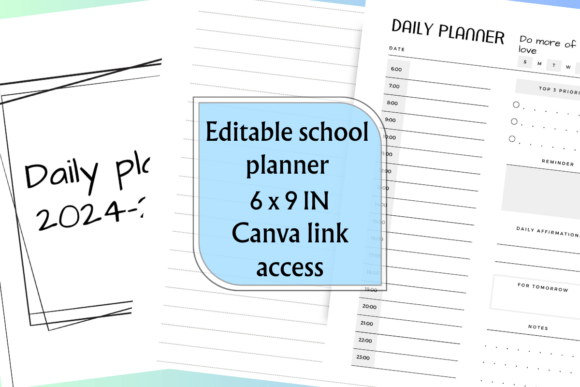
Editable School Planner 2024-2025
If you’ve ever stared at a blank calendar page in August, wondering how to juggle parent-teacher conferences, after-school tutoring, band practice, soccer games, and your own work deadlines—all while keeping track of lunch money and permission slips—you’re not alone. The Editable School Planner 2024-2025 isn’t just another printable—it’s a flexible, real-world tool designed for the messy, layered reality of modern school life.
What It Actually Is (and What It’s Not)
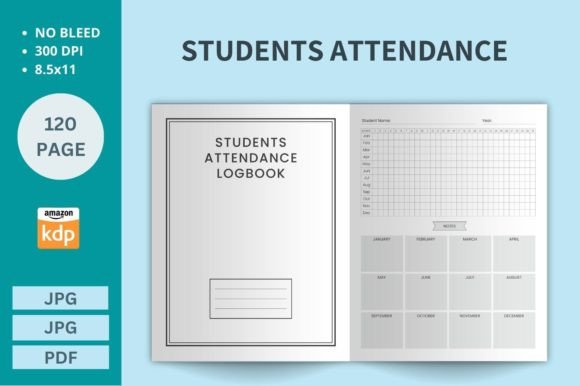
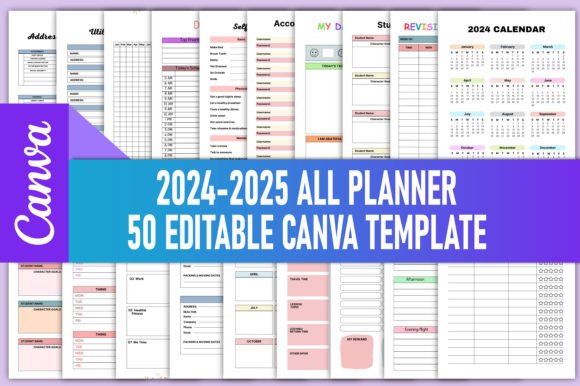
This isn’t a rigid, pre-filled PDF with fixed dates or generic layouts. It’s a high-quality, print-ready PDF file built for Canva—meaning you get an editable Canva link that opens directly in your browser. You can change fonts, colors, add your child’s name, insert school logos, adjust weekly layouts, or even swap out pages entirely (like swapping a double-page weekly spread for a subject-specific tracking sheet). Once customized, it exports cleanly as a professional PDF—ready for home printing or direct upload to Amazon KDP.
It’s also not limited to students. While “school planner” sounds academic, its structure supports coordination across roles: teachers managing multiple classes, homeschooling parents designing custom curricula, grad students balancing research and teaching assistant duties, and even school counselors tracking student check-ins and goal progress.
Where It Fits Into Real Life—Not Just Theory
Consider Maya, a middle school science teacher in Ohio. She uses the Editable Back To School Planner 2024-2025 Canva KDP Interior to build her own version: one tab for lesson planning aligned to NGSS standards, another for IEP accommodations tracking, and a third for parent communication logs—all color-coded and branded with her school’s palette. She duplicates pages for each grading period and drops in editable checkboxes for lab safety sign-offs. No more flipping between notebooks, spreadsheets, and sticky notes.
Then there’s James, a freelance graphic designer and dad of two. He doesn’t need lesson plans—but he *does* need to coordinate pick-up/drop-off across three schools, track medication refills for his daughter’s asthma, and keep his own client deadlines from bleeding into family time. He edits the planner to replace “homework tracker” with “family health log” and adds a monthly “client sync” section beside the academic calendar. The editable format lets him repurpose—not just reformat.
Homeschool families often face the most dynamic scheduling needs. One user replaced the standard weekly grid with a rotating subject wheel (Math → Science → History → Language Arts), added space for portfolio documentation, and embedded QR codes linking to video lessons. Because it’s editable in Canva, she didn’t need design skills—just drag-and-drop intuition.
Who Gets the Most Out of It (Beyond Students)
- Teachers building classroom systems: Use it to draft seating charts, behavior trackers, or substitute teacher binders—then duplicate and tweak for each semester.
- Administrators and curriculum coordinators: Adapt the interior layout for staff meeting agendas, PD session notes, or school improvement plan milestones.
- KDP sellers and digital product creators: This is a ready-to-upload interior file—no formatting headaches. Add your cover, set bleed and margins, and publish fast. Many sellers layer in bonus pages (e.g., “Grading Rubric Cheat Sheet” or “Parent Email Templates”) to increase perceived value.
- School counselors and special educators: Swap out generic goal-setting pages for editable SMART objective trackers, behavior intervention logs, or transition planning worksheets for students moving between grades or programs.
Practical Things to Keep in Mind Before You Edit
Canva editing is intuitive—but it helps to know what’s easy versus what requires extra steps. Fonts, colors, text boxes, and image placeholders are fully editable right away. Layouts (like column widths or page orientation) stay stable unless you intentionally resize or rearrange elements. If you plan to print double-sided, check that page breaks align with your binding preference—especially if adding custom dividers or tabs.
You’ll also want to consider your audience’s printing habits. Some users prefer letter-size (8.5" x 11") for home printers; others choose 7" x 10" for portability. The file is designed to scale cleanly, but always do a test print of the first few pages—especially if inserting photos or logos that rely on precise alignment.
And here’s something often overlooked: accessibility. While Canva supports alt-text for images, screen reader compatibility depends on how you structure headings and lists. If you’re adapting this for school districts or inclusive education settings, keep heading hierarchy clear (use H1/H2 styles in Canva’s text menu) and avoid relying solely on color to convey meaning—like using red only to mark deadlines without accompanying icons or labels.
Strengths That Make It Stick
The biggest strength isn’t just editability—it’s intentional flexibility. Unlike generic planners with filler sections (“Weekly Reflection”), this one includes purpose-built pages: grade-level academic calendars (aligned to U.S. public school start/end dates), supply checklists by grade band, and even editable report card comment banks. You’re not starting from zero—you’re starting from “almost exactly right.”
It also bridges digital and physical workflows seamlessly. You can collaborate with co-teachers in Canva, share drafts via link, then lock the final version and export as a print-only PDF—no risk of accidental edits post-printing. For KDP sellers, that means consistency across batches and easy version control (e.g., “2024–2025 Standard Edition” vs. “Homeschool Bundle Add-On”).
A Few Honest Limitations
It won’t auto-populate holidays or snow days—those still require manual updates based on your district’s calendar. And while it supports bilingual labeling (you can type Spanish headers or translate subject names), it doesn’t include built-in translation tools. If you’re creating a version for ESL families, plan time to review translations for accuracy and cultural relevance.
Also worth noting: Canva’s free tier works perfectly for basic edits, but if you’re layering in premium stock photos, advanced animations, or brand kits, you may hit usage limits. Most educators and small sellers find the free version more than sufficient—especially since the focus is clarity, not decoration.
Why “Ready to Upload on Amazon KDP” Matters More Than You Think
For creators, time is the real bottleneck—not design skill. This Editable School Planner 2024-2025 removes three common KDP friction points: inconsistent margins, unoptimized bleed settings, and mismatched page counts between interior and cover. It arrives pre-formatted to KDP’s most-used specs (6" x 9", 7" x 10", or 8.5" x 11"), with CMYK-safe colors and embedded fonts. No last-minute panic over “Your file contains RGB elements.”
One seller told us she uploaded, approved, and had her first sale within 18 hours—because she spent those hours personalizing content (adding her teaching blog URL, tweaking the “Teacher Tips” sidebar), not troubleshooting PDF errors. That kind of efficiency compounds: every minute saved on formatting is a minute spent refining your niche (e.g., “Editable School Planner 2024-2025 for Montessori Educators”) or expanding your bundle (add editable lesson plan templates or student self-assessment rubrics).