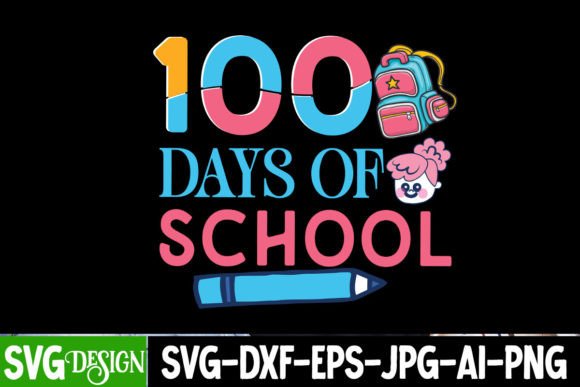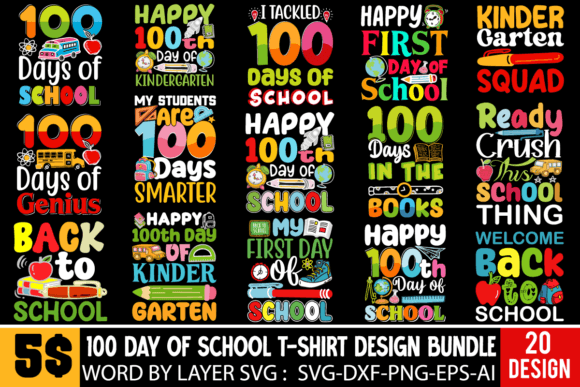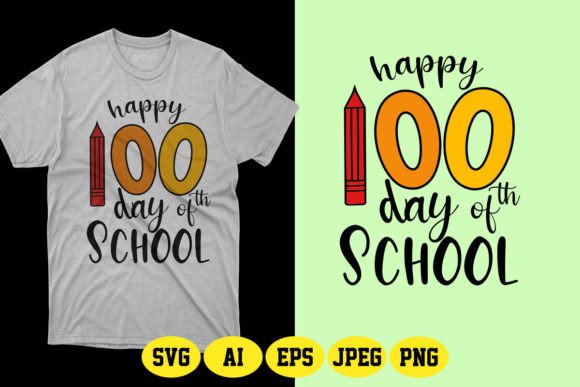
100 Days of School Retro T Shirt
A 100 Days of School Retro T Shirt isn’t just apparel—it’s a deliberate communication tool with measurable strategic utility. For educators planning classroom celebrations, small business owners launching seasonal merch drops, or designers building nostalgic brand extensions, this piece functions as both artifact and asset. Its retro aesthetic—think chalkboard textures, vintage typography, and muted school-day palettes—carries emotional resonance that modern minimalism often lacks. But its real value emerges not from nostalgia alone, but from how intentionally it’s deployed: as a lever for engagement, consistency, and audience alignment.
Why This Design Delivers Strategic Clarity
Clarity starts with constraint. A 100 Days of School Retro T Shirt anchors messaging in a specific milestone—100 days—not just “back to school” broadly. That specificity matters. It gives teachers a concrete hook for student motivation; marketers a timely, low-competition campaign window; and creators a focused theme for social content, email sequences, or limited-edition bundles. Unlike generic school-themed designs, this one invites narrative: progress tracking, reflection, celebration. That narrative builds continuity across touchpoints—classroom posters, parent newsletters, PTA event signage—all reinforced by the same visual language.
Consider an elementary school principal launching a literacy initiative. Pairing a 100 Days of School Retro T Shirt with a reading log and milestone badges creates a cohesive system—not just swag, but scaffolding. The shirt becomes a wearable checkpoint, reinforcing commitment without requiring constant verbal reminders. Similarly, a print-on-demand entrepreneur can time inventory, ad spend, and influencer outreach around the natural rhythm of the academic calendar. That timing reduces acquisition cost and increases conversion because demand is predictable, not manufactured.
File Flexibility Enables Real-World Execution
The included file formats—EPS, AI, SVG, and high-res PNG (4500×5400 at 300 dpi)—aren’t just technical details. They’re operational enablers. An EPS or AI file allows precise color adjustments for brand alignment: swapping mustard yellow for your district’s official blue, or softening contrast for younger audiences. The SVG ensures crisp scaling on digital banners or interactive classroom displays. The PNG? That’s your production-ready asset—optimized for direct-to-garment printers, sublimation, or mockup generators used in product listings.
Crucially, the 100-color changeable feature means one design serves multiple stakeholders without redesign overhead. A PTA group can use teal, the school’s robotics team can use silver, and the art club can use burnt orange—all from the same vector source. That flexibility reduces decision fatigue, accelerates approvals, and supports decentralized execution (e.g., grade-level teams customizing colors independently while maintaining design integrity).
When Timing and Context Matter Most
A 100 Days of School Retro T Shirt works best when aligned with behavioral rhythms—not just calendar dates. In most U.S. districts, Day 100 falls between late January and mid-February. That timing coincides with post-holiday re-engagement, mid-year assessment windows, and renewed focus on growth mindset. Launching the shirt then taps into existing momentum rather than fighting seasonal inertia.
But context determines impact. Using it solely as a one-off fundraiser misses opportunity. Instead, embed it in a sequence: introduce the concept on Day 85 with a countdown poster, distribute shirts on Day 100 during an assembly, then repurpose the design on Day 120 as a “100 More Days to Summer” variant—extending shelf life and reinforcing visual recognition. Educators do this instinctively with anchor charts; marketers should apply the same principle to merchandise.
Risks of Tactical Deployment Without Strategic Intent
Without clear goals, even a well-designed 100 Days of School Retro T Shirt becomes decorative noise. Common missteps include:
- Assuming nostalgia equals relevance: A 1950s-style chalkboard motif may resonate with Gen X parents but feel alienating to Gen Z students or immigrant families unfamiliar with that visual shorthand. Test with your actual audience—not just internal assumptions.
- Isolating the shirt from systems: Printing 200 shirts without coordinating lesson plans, photo ops, or social sharing guidelines dilutes impact. The garment should be part of a documented workflow—not an afterthought.
- Overlooking durability in execution: A PNG file works for Etsy listings, but if you’re licensing the design to a uniform vendor, they’ll need editable vectors. Confirm format requirements before finalizing partnerships.
These aren’t theoretical pitfalls. They’re operational gaps that erode ROI—whether measured in student participation rates, merch profit margins, or brand recall metrics.
Practical Planning: From Concept to Consistent Use
Start with outcome mapping. Ask: What behavior, perception, or result must change for this to be worth the investment? If the goal is increased family engagement, pair the shirt with a take-home activity kit—not just a sale. If it’s brand differentiation for your tutoring business, use the retro motif across website headers, worksheet borders, and Zoom backgrounds to create ambient familiarity.
Then audit your assets. Do you have access to a designer who can adjust colors and layout—or will you rely on automated tools? If the latter, prioritize SVG and layered PNG files over AI/EPS, which require specialized software. Likewise, verify printer specifications early: some DTG providers require RGB, others CMYK; some need bleed, others don’t. One misaligned spec can delay delivery by 7–10 days.
Finally, build in feedback loops. After Day 100, survey teachers: Was the shirt used in class? How? Did students reference it unprompted? Track social shares using a unique hashtag (#Our100DaysRetro) and note which variants (color, grade-specific text) generated most saves or tags. That data informs next year’s iteration—not just aesthetics, but positioning.
Long-Term Value Beyond the Calendar
The strongest 100 Days of School Retro T Shirt strategies treat the design as modular infrastructure—not a disposable trend. The retro framework adapts: swap “100 Days” for “100 Books Read,” “100 Acts of Kindness,” or “100 Days of Coding.” The visual grammar stays consistent; only the variable changes. That consistency builds recognition faster than entirely new designs each cycle.
For freelancers and agencies, owning adaptable retro assets means faster client turnarounds. A school district needing a “100 Days of STEM” version gets it in hours—not days—because the typography hierarchy, spacing rules, and color logic are already validated. That reliability compounds credibility. Clients return not just for the shirt, but for the predictability of outcomes.
And for educators building legacy programs, these shirts become artifacts of institutional memory. Photos of last year’s 100 Days celebration—worn with pride—become this year’s motivational reference point. That continuity fosters belonging, especially for students navigating transitions: new schools, new grades, new routines. The shirt isn’t clothing. It’s continuity made tangible.
Ultimately, the 100 Days of School Retro T Shirt earns its place when it serves a defined purpose—not when it looks good in isolation. Its retro styling opens doors; its functional versatility keeps them open. Use it to reinforce what matters: progress made visible, effort acknowledged, and community built through shared, intentional moments.